
Cataract surgery is one of the most commonly performed and successful procedures in modern medicine. Yet for many patients, the journey begins with uncertainty—questions about vision changes, diagnosis, and what to expect from an assessment.
A thorough eye health evaluation is not just a routine step. It’s a critical part of ensuring safe, effective, and personalised care.
The best cataract surgeons take time to understand not just the condition of your eyes, but your overall visual needs, so that treatment decisions are made with precision and confidence.
What Is the Purpose of a Cataract Assessment?
A cataract assessment is designed to determine:
- Whether cataracts are affecting your vision
- The severity and progression of the condition
- Whether surgery is appropriate at this stage
- What type of treatment will deliver the best outcome
Importantly, it’s not just about identifying cataracts but about understanding how they impact your daily life.
What Symptoms Does a Cataract Surgeon Look For?
Before any tests are carried out, your surgeon will discuss your symptoms in detail.
Common concerns include:
- Blurred or cloudy vision
- Difficulty seeing in low light
- Sensitivity to glare (especially at night)
- Faded or dull colours
- Frequent changes in prescription
These conversations help the surgeon understand how your vision is changing and whether cataracts are the likely cause.
How Is Your Vision Tested During the Assessment?
A comprehensive eye exam is a key part of the process.
Visual acuity testing
This measures how clearly you can see at different distances.
Refraction assessment
This determines whether changes in your prescription can improve vision.
Why this matters
It helps distinguish between vision loss caused by cataracts and other conditions that may require different treatment.
How Does a Surgeon Examine the Cataract Itself?
To assess the cataract directly, specialised equipment is used.
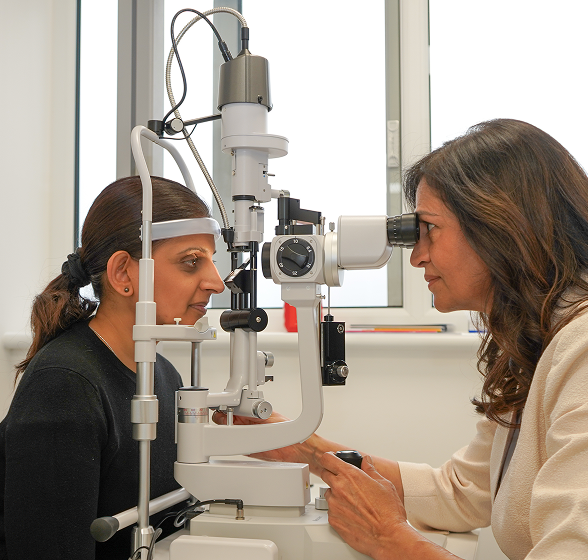
Slit-lamp examination
This allows the surgeon to examine the structure of the eye in detail.
What it reveals
- Location of the cataract
- Density and progression
- Impact on light entering the eye
This step provides a clearer understanding of how advanced the cataract is and how it may affect surgery.
Are Other Eye Conditions Checked at the Same Time?
Yes, and this is a crucial part of the assessment.
The best cataract surgeons look beyond the cataract itself to ensure there are no underlying issues that could affect outcomes.
Common conditions assessed include
- Glaucoma
- Macular degeneration
- Retinal conditions
Why this is important
Some conditions can influence:
- Surgical approach
- Recovery expectations
- Final visual outcome
A complete assessment ensures that treatment is both safe and appropriate.
How Is Your Eye Measured for Surgery?
If surgery is being considered, precise measurements are taken to plan the procedure.
Biometry Testing
This measures:
- Eye length
- Corneal curvature
- Lens requirements
OCT (Optical Coherence Tomography) Scans
OCT scans create highly detailed images of the retina and the structures at the back of the eye. These scans help identify any underlying retinal or macular conditions that could influence visual outcomes after cataract surgery.
Corneal Topography
Corneal Topography maps the shape and curvature of the cornea in fine detail. This is especially important when considering premium lens options, as it helps assess astigmatism, corneal irregularities, and overall suitability for advanced intraocular lenses.
The goal
To select the most suitable intraocular lens (IOL) for your vision needs while ensuring the safest and most personalised treatment approach possible.
These measurements and scans work together to help ensure that your post-surgery vision aligns closely with your lifestyle – whether that’s reading, driving, using digital devices, or reducing dependence on glasses.
What Role Does Your Lifestyle Play in the Assessment?
A high-quality assessment is not just clinical but personal.
Your surgeon will ask about:
- Your daily activities
- Work or hobbies
- Driving requirements
- Use of glasses or contact lenses
These details help guide decisions around lens selection and treatment options.
For example, someone who drives frequently at night may have different priorities compared to someone who focuses on reading or close-up tasks.
How Does Technology Support the Assessment Process?
Modern cataract assessments often use advanced diagnostic tools to improve accuracy.
These may include:
- Digital imaging of the retina
- Corneal mapping
- Optical coherence tomography (OCT)
Why this matters
These technologies allow for:
- More precise diagnosis
- Better surgical planning
- Improved visual outcomes
Clinics offering comprehensive assessments—such as those outlined at Ranjit Sandhu often combine clinical expertise with advanced technology to provide a detailed understanding of your eye health.
What Questions Should You Expect During Your Consultation?
A good consultation is a two-way conversation.
You may be asked about:
- How your vision has changed over time
- Any difficulties with daily activities
- Your medical and eye history
At the same time, you should feel comfortable asking questions such as:
- Do I need surgery now, or can it wait?
- What results can I expect?
- What are the risks and recovery process?
Clear communication is an essential part of the assessment.
How Does a Surgeon Decide If Surgery Is Needed?
Cataract surgery is usually recommended when vision problems begin to affect your quality of life.
This decision is based on:
- Test results
- Severity of the cataract
- Impact on daily activities
Importantly, surgery is not always urgent. In some cases, monitoring may be recommended until symptoms progress.
The goal is to ensure that treatment is timed appropriately and tailored to your needs.
What Makes a Cataract Assessment “High Quality”?
Not all assessments are the same.
A high-quality assessment involves:
- Thorough testing
- Clear explanations
- Personalised recommendations
- Time to ask questions
It should leave you feeling:
- Informed
- Reassured
- Confident in your next steps
Frequently Asked Questions (FAQs)
How long does a cataract assessment take?
Typically, between 30 minutes to an hour, depending on the level of testing required.
Is a cataract assessment painful?
No, the assessment is non-invasive and generally comfortable.
Can cataracts be treated without surgery?
In early stages, vision changes may be managed with glasses, but surgery is the only way to remove a cataract.
Final Thoughts
A cataract assessment is more than a routine check but the foundation of your treatment journey.
The best cataract surgeons take a careful, patient-focused approach, combining clinical expertise with a clear understanding of your individual needs.
By assessing your eye health thoroughly and thoughtfully, they ensure that any treatment, when needed is carried out safely and with the best possible outcome in mind.